Siroccopteryx tooth
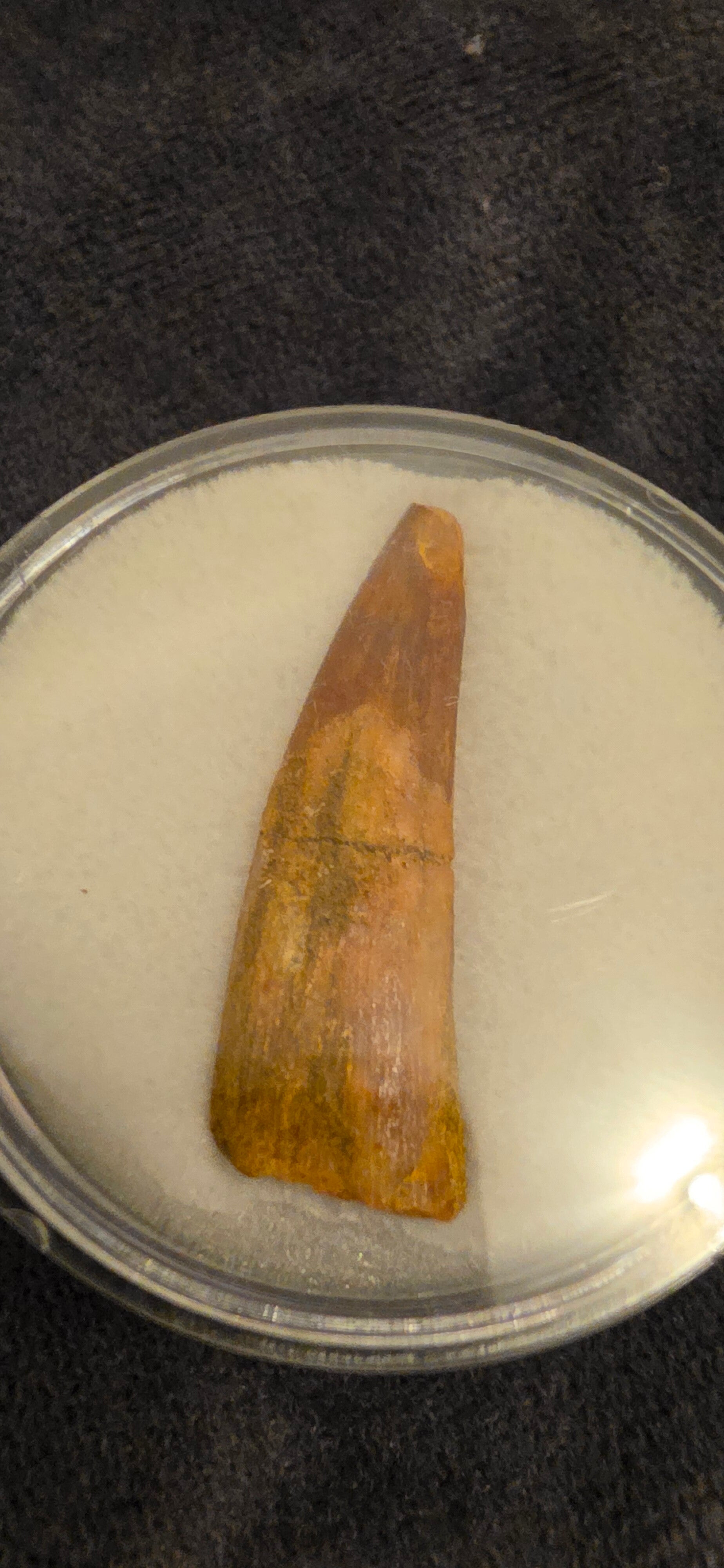
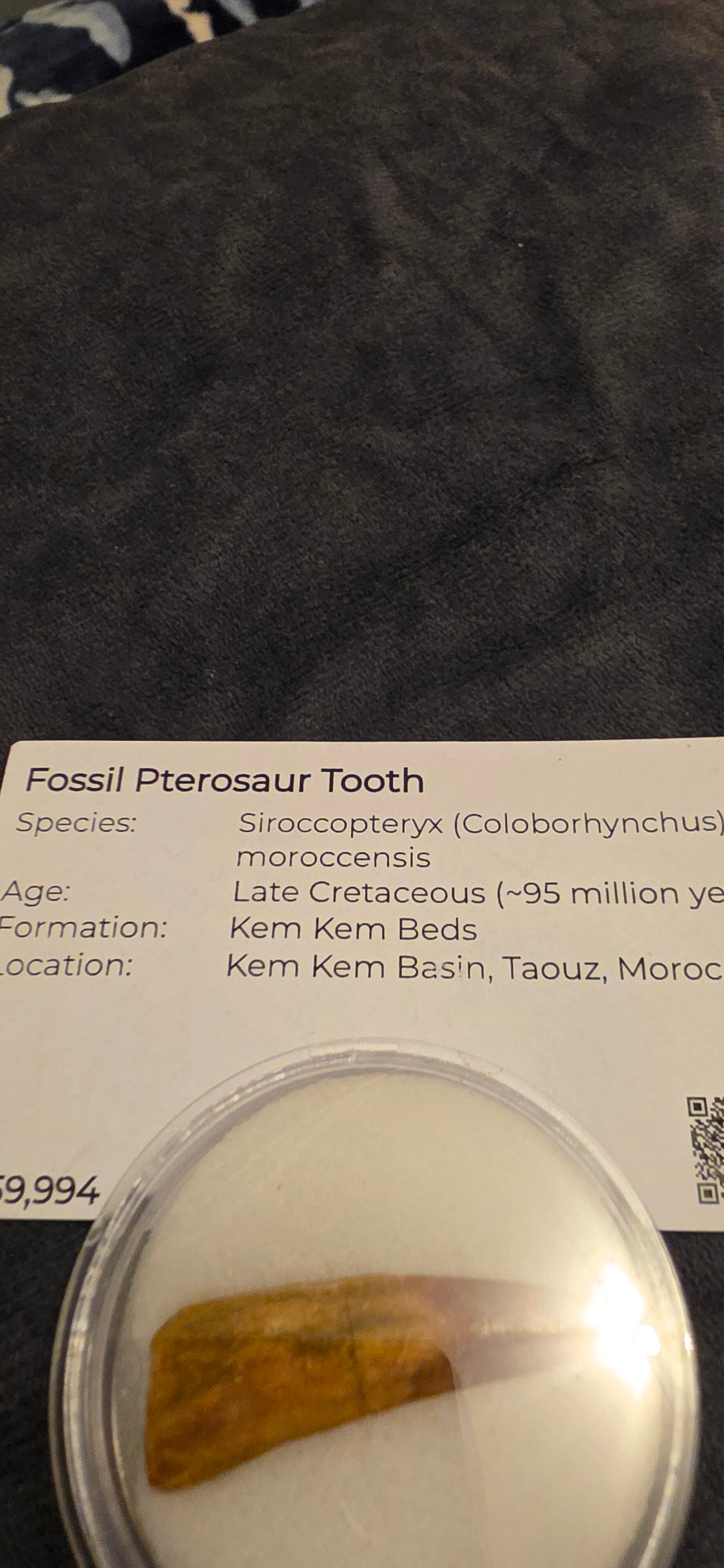
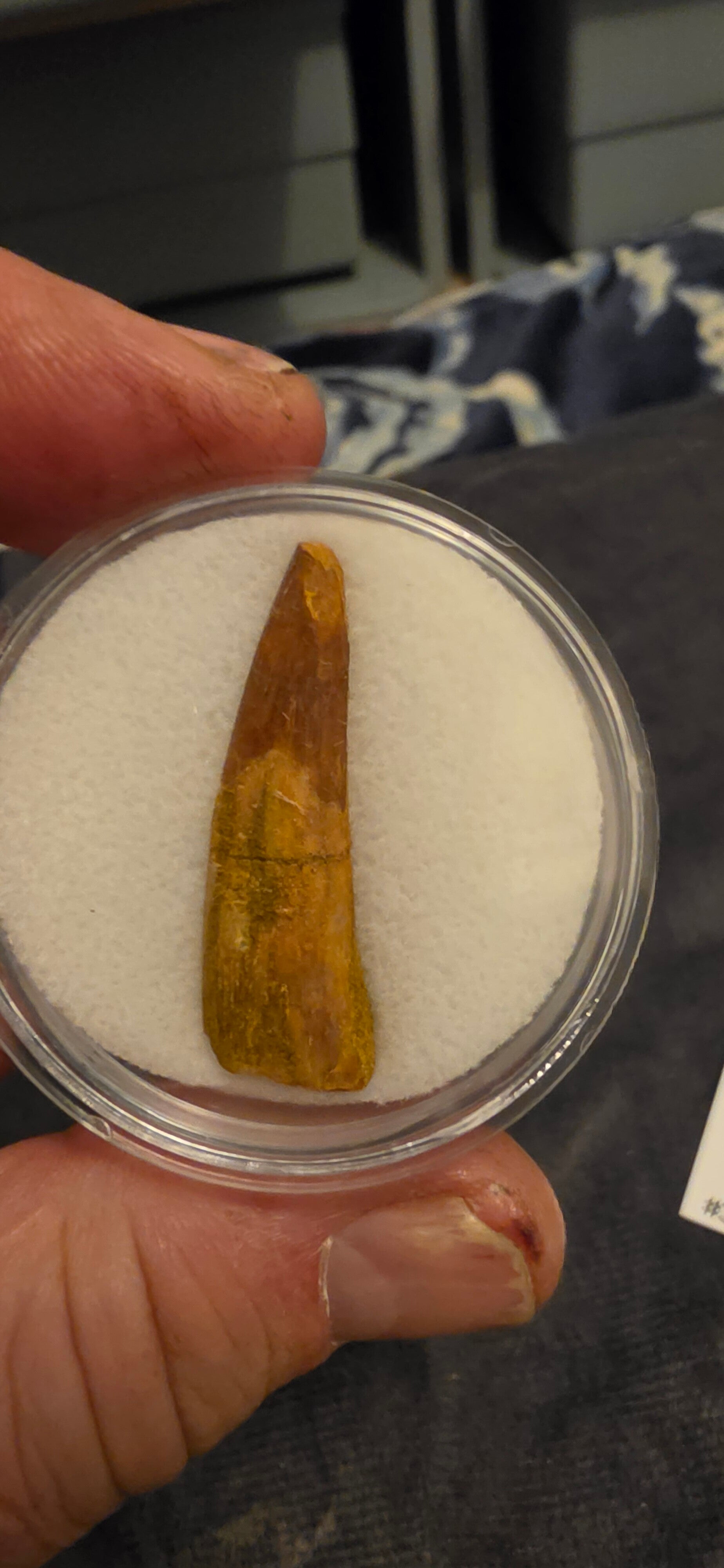
Siroccopteryx is an extinct genus of anhanguerid pterodactyloid pterosaur which lived in Morocco during the Cenomanian stage of the Late Cretaceous. Some researchers, such as David M. Unwin, consider the genus a junior synonym of Coloborhynchus.
The genus was named and described in 1999 by Bryn Mader and Alexander Kellner. The name Siroccopteryx means "wing of the Sirocco", referring to the warm wind that originates in the North Africa and then goes through the Mediterranean, and the Greek word pteryx, a standard suffix for pterosaur genera that means "wing". The epithet of the type species S. moroccensis refers to its country of origin.
This pterosaur is known only from the front part of the jaw with teeth. The holotype fossil, LINHM 016 (Long Island Natural History Museum), was found near Ksar es Souk, in the province of Errachidia in the region of Meknes-Tafilalet at 30.4 ° N, 4.9 ° longitude (17.6 ° N, 4.2 ° W longitude) in Beg'aa, west of Hamada du Guiren in southeastern Morocco, in a layer of red sandstone, a fine-grained alluvium from the Albian to Cenomanian. It consists of front teeth and a snout that's not compressed. The muzzle was long and narrow, with a large elongated terminal part, along with some sort of shaped crest anterior keel higher than that of Anhanguera but not as high as that of Coloborhynchus or Tropeognathus. The teeth were sharp but short and more robust than in Anhanguera. The bone is rough and leathery, with strange marks of wrinkles and depressions, this may be a consequence of the conditions of preservation, but the descriptors suggest that indicate a disease, possibly caused by dental abscesses. According to André Veldmeijer, is probably that this damage was post-mortem and indicate the presence of a horn cover in the ridge.
The wingspan of this large pterosaur should be 4 to 5 meters (13 to 16 ft). It is likely that this animal was a specialized glider, and ventured into the sea off the coast of Africa, to capture fishes that swam near the surface.
Kem Kem Basin, Taouz, Morocco 1.41"