Squalicorax pristodontus
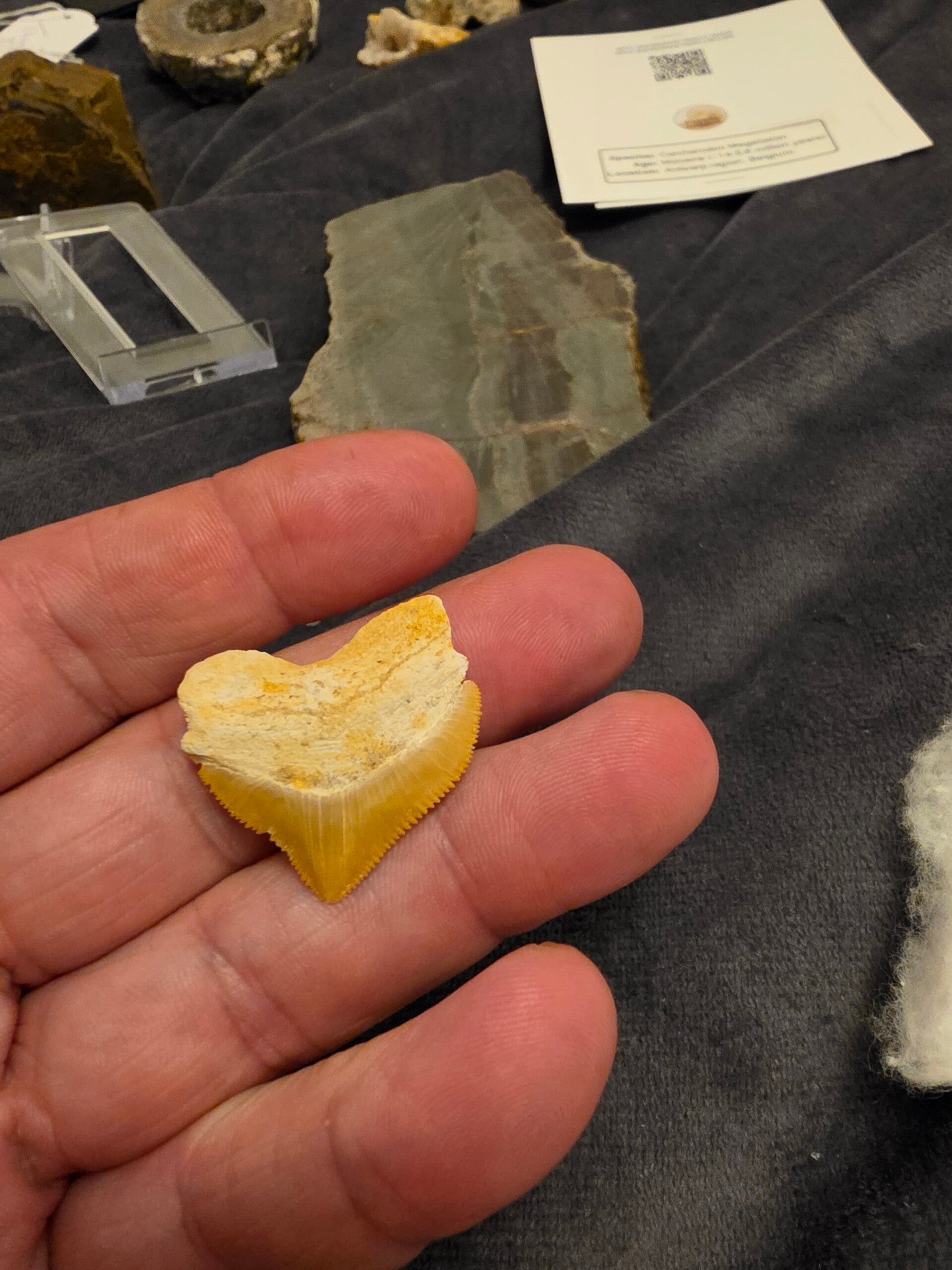
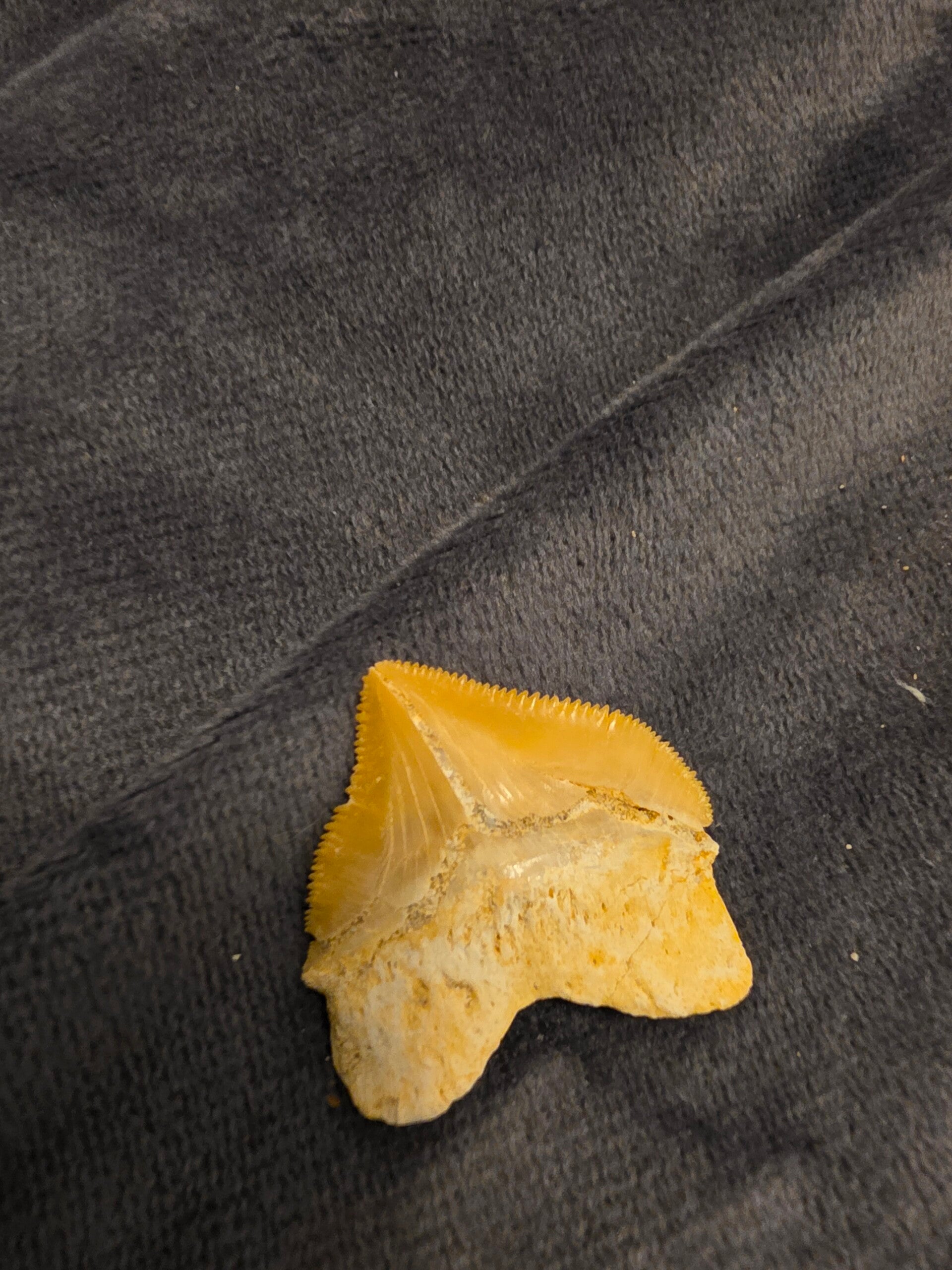
Squalicorax was a medium-sized shark, typically measuring about 1.8–3 metres (5.9–9.8 ft) long. The largest specimen of S. pristodontus, SDSM 47683, was significantly larger, measuring up to 4.8 metres (16 ft) long.
Their bodies were similar to the modern gray reef sharks, but the shape of the teeth is strikingly similar to that of a tiger shark.[citation needed] The teeth are numerous, relatively small, with a curved crown and serrated, up to 2.5–3 cm (0.98–1.18 in) in height. Large numbers of fossil teeth have been found in Europe, North Africa, and North America. Squalicorax is one of three Cretaceous lamniformes to garner serrations along with Pseudocorax and Galeocorax. The world's largest and most complete semi-articulated fossil of Squalicorax was found in 2014 in stores of the Canadian Fossil Discovery Centre in Morden, Manitoba, in Canada, where it is now displayed. It measures more than 3 m in length.[
Squalicorax was a coastal predator and scavenger, as evidenced by a Squalicorax tooth found embedded in the metatarsal (foot) bone of a terrestrial hadrosaurid dinosaur that most likely died on land and ended up in the water.[6] Other food sources included sea turtles, mosasaurs, ichthyodectid fish, and other marine life. Tooth marks from this shark have also been found on the bones of Pteranodon, but whether the shark actively snatched such large pterosaurs out of the air, attacked them as they dove after prey, or were simply scavenging is not known.
Queensland Zem- Ouled Abdoun Basin, Morocco. Cretaceous period 66 mya