Large natural Rose Quartz
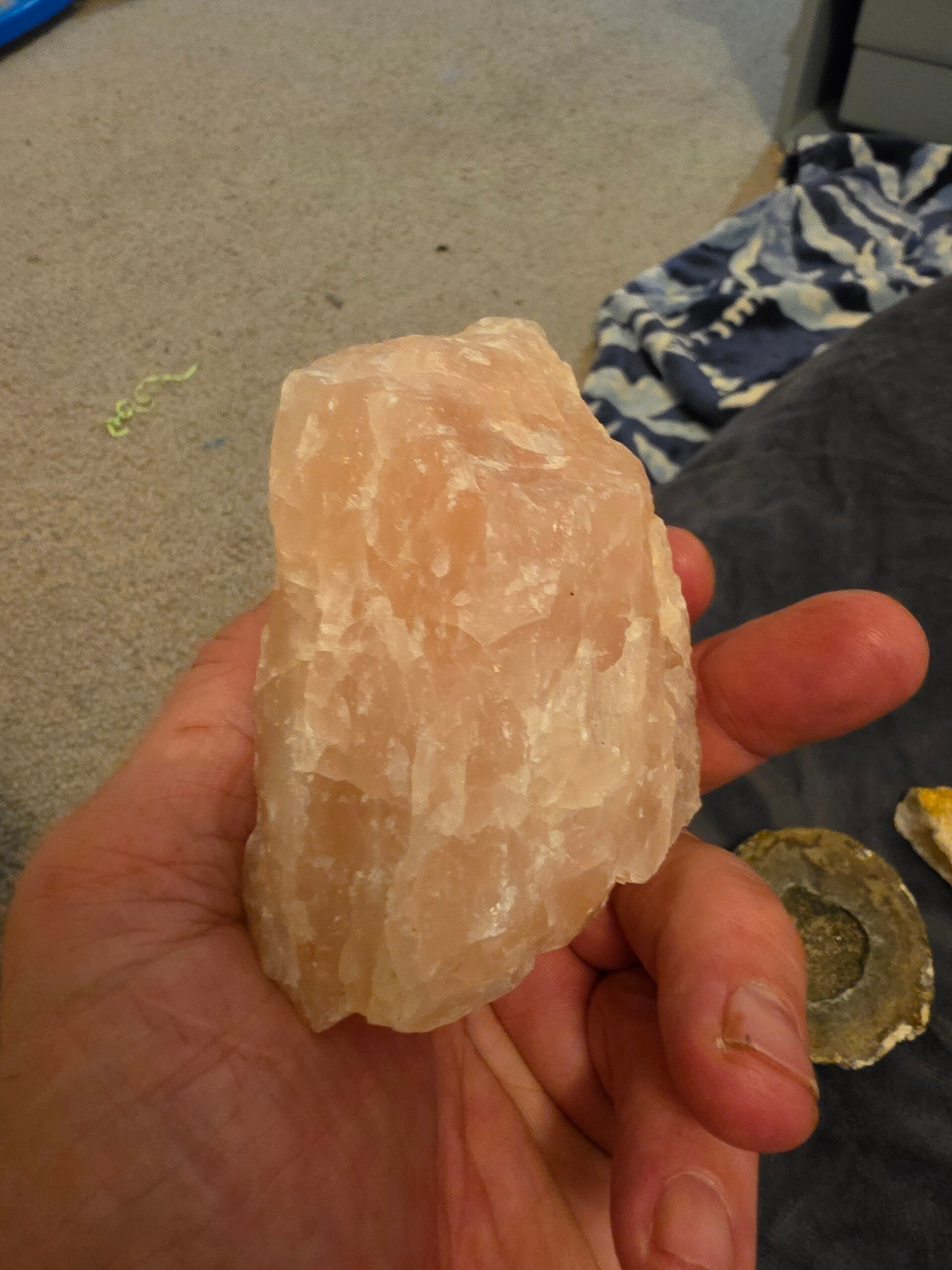
The gentle pink hue of Rose Quartz arises from trace amounts of titanium, iron, or manganese within the quartz crystal structure. Its formation typically occurs in pegmatites or hydrothermal veins, where silica-rich fluids cool slowly over extended periods. This gradual cooling allows for the development of large, well-formed crystals. The presence of these specific elements during crystallization dictates the intensity and shade of pink, ranging from pale blush to a deeper rose. The stone's sometimes cloudy appearance is due to microscopic fibrous inclusions, which may also contribute to its color.
Rose Quartz formed mainly during Precambrian to Late Cretaceous. For reference, it spans from early bacterial life (3.5B years ago) to when dinosaurs went extinct (65M years ago). Most specimens formed in pegmatites during major mountain-building events.